Troubleshooting Scaffold Load Imbalances

Scaffold load capacity depends on even weight distribution. Load imbalances occur from uneven stacking, overloading, or poor bracing. This guide lists common symptoms, likely causes, and field fixes to restore stability before failure happens.
- Uneven loading shifts weight to the base plates, causing leaning or settlement.
- Visual signs like twisted members or loose couplers often point to capacity limits.
- Correcting imbalances requires removing load, repositioning components, and verifying bracing.
- Prevention relies on load planning, regular inspections, and clear access control.
Why Load Imbalances Happen on Site
Scaffold load capacity is not a single number. It is a limit that changes the moment a worker, tool, or material sits on the platform in a specific spot. Engineers calculate capacity assuming loads are spread across the structure. Field conditions rarely match that assumption perfectly.
Load imbalances develop when weight concentrates in one area while the opposite side remains empty. The frame then bends, twists, or settles unevenly. This happens on every project type, from concrete pours to external facade work. The problem is rarely a single error. It is usually a combination of poor planning, rushed work, and lack of supervision.
Identifying these issues early prevents scaffold instability. Once a structure starts to lean or shift, the correction window closes fast. The following sections cover the signs to watch for, the most common root causes, and the specific actions required to bring the scaffold back into service.
Identifying the Signs of Structural Shift
Before a scaffold fails catastrophically, it gives warning signs. Most of these are visible to a trained supervisor or competent person. You do not need to guess. You need to know what to look for.
- Visible leaning. If the scaffold moves away from vertical, the base plates are no longer bearing equal weight.
- Twisted platforms. Decking that twists or bows indicates the top frame members are carrying uneven side loads.
- Loose couplers. Connections that are hard to tighten or have gaps suggest the frame is under stress.
- Settlement. If the base plates sink into soft ground while other points remain high, the soil is failing under concentrated load.
- Screamed metal. Unusual creaking or popping sounds during loading mean the structure is moving beyond its elastic limit.
These symptoms often appear together. A lean usually happens with settlement. Twisted decking usually follows a loose coupler. Do not isolate a single sign. Look at the whole structure. If you see two or more symptoms, stop work immediately.
Common Causes of Scaffold Instability
Most scaffold instability issues trace back to three main sources. Understanding the cause is necessary before applying a fix. Guessing the fix usually makes the problem worse.
1. Uneven Load Distribution
Workers and materials are not always spread evenly. A pallet of bricks sitting on one corner of a platform creates a tipping moment that the opposite legs must resist. If the opposite side is empty, the structure has no counterweight. This is the most common cause of lean.
2. Overloading
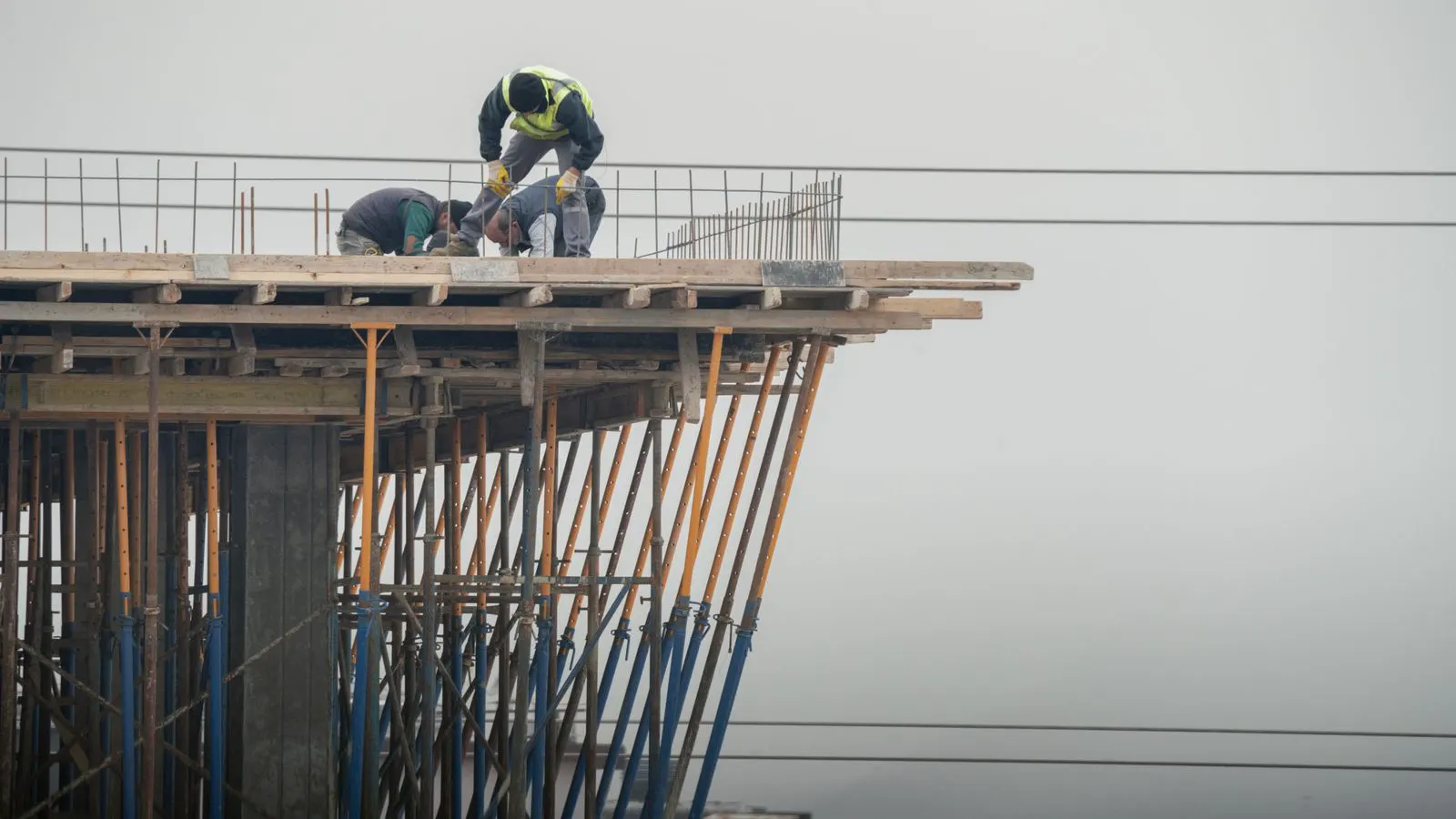
Exceeding the rated capacity of a section is a direct violation of scaffold load capacity limits. This often happens during concrete pours. Formwork systems and scaffolding are sometimes used interchangeably by less experienced crews. The load from wet concrete is vastly different from a pallet of dry blocks. If the scaffold is not designed for that specific load, it will deflect or buckle.
3. Inadequate Bracing
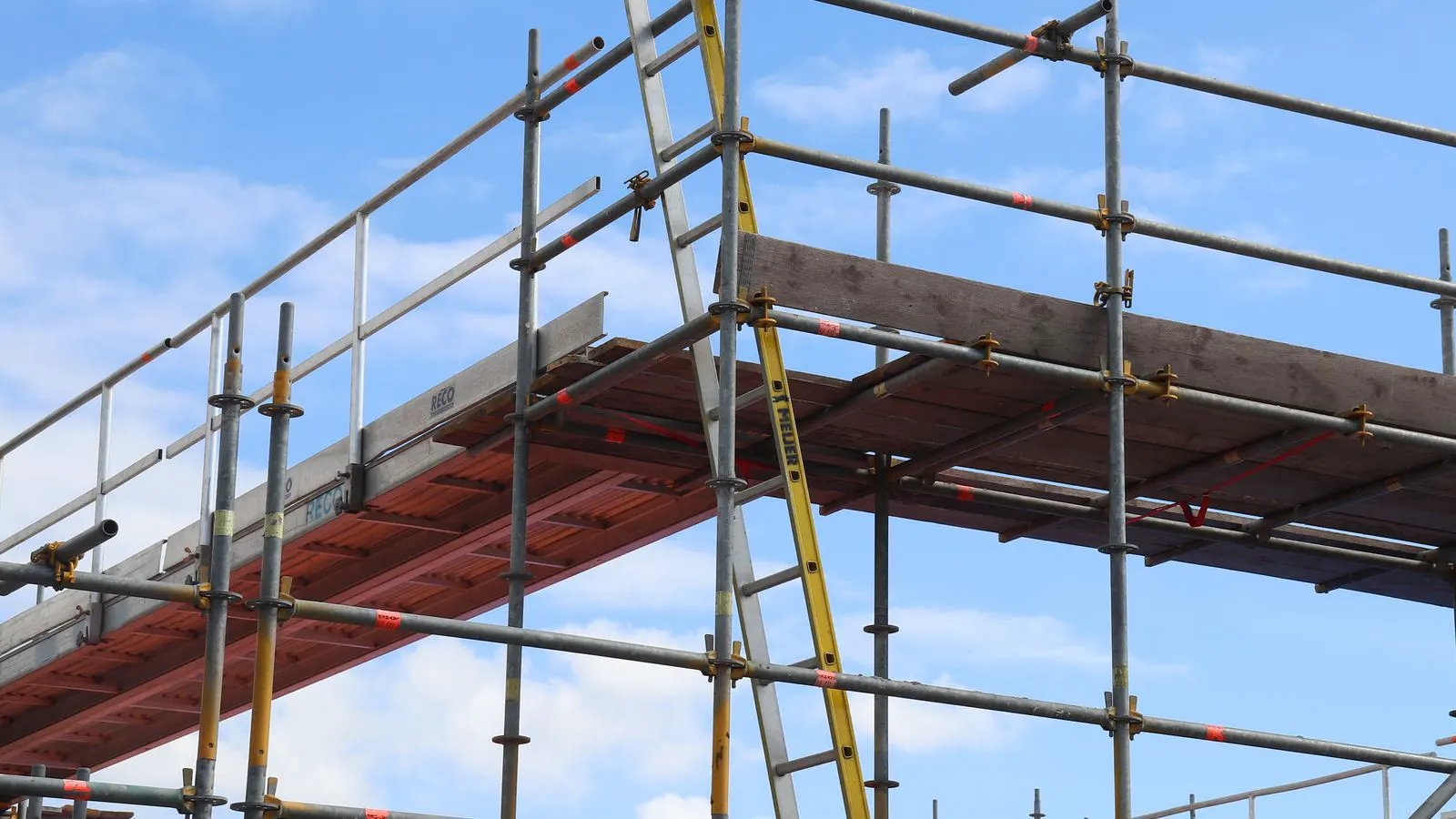
Braces hold the frame rigid. If diagonal braces are missing, the scaffold becomes a flexible mechanism. A flexible mechanism cannot resist side loads. Even a small imbalance will cause the whole structure to sway or collapse inward.
4. Poor Base Support
Scaffold load capacity assumes a firm, level base. If the base plates are on soft mud, gravel, or debris, the load spreads unevenly. One leg sinks. The structure tilts. The top load shifts. The cycle accelerates.
Troubleshooting Table: Symptoms, Causes, and Fixes
Use this table to diagnose and correct common issues. The “What to Do” column provides the immediate action. Do not attempt a fix if the structure is actively failing. Evacuate the area first.
| Symptom | Likely cause | What to do |
|---|---|---|
| Scaffold leans to one side | Uneven load on one platform level; missing diagonal brace | Remove load from the heavy side. Add diagonal brace. Re-level base plates. |
| Base plates sinking unevenly | Soft ground under one leg; overloaded leg | Place a base plate on a solid foundation. Reduce load on that leg. |
| Top platform twisting | Load concentrated at one corner; loose couplers | Spread load evenly. Tighten all couplers. Check for bent tubes. |
| Metal creaking during movement | Structural movement beyond elastic limit; overloading | Stop work immediately. Remove all load. Inspect for deformation. |
| Scaffold sways in wind | Missing lateral bracing; loose base connections | Install lateral braces. Check base plate anchors. |
| Decking bowing under weight | Overloaded deck; weak deck supports | Remove load. Replace deck with rated material. Check support spacing. |
Immediate Correction Steps
When you identify a load imbalance, you must correct it systematically. Rushing the fix often creates a new instability. Follow this order of operations.
- Stop all work. Clear the area. No one should be on the scaffold or near the affected zone.
- Remove the load. Take off the material causing the imbalance. Do not try to push it to the other side. That transfers the shift.
- Check the structure. Inspect tubes, couplers, and base plates for damage. If you see bent tubes or cracked couplers, tag the scaffold out of service.
- Re-level the base. Use shims or base plates to bring all legs to the same height. Ensure the ground is firm.
- Verify bracing. Confirm all required diagonal and lateral braces are in place and tight.
- Reapply load gradually. Bring the load back in small increments. Check for movement at each stage. If the structure shifts, stop and investigate.
Never load the scaffold to test if it is stable. If it was unstable, it will remain unstable. The goal is to restore the original design conditions, not to push the structure to its limit.
Preventing Load Imbalances Before They Start
Fixing a problem is reactive. Prevention is cheaper and safer. The most effective prevention is planning.
- Plan the load. Know what is going on the scaffold. Concrete, steel, or dry materials? Each has a different weight and behavior. Calculate the maximum load per platform.
- Distribute the weight. Stack materials near the center of the platform. Avoid placing heavy items at the edges.
- Control access. Only authorized workers should enter the scaffold. Uncontrolled foot traffic creates unpredictable loads.
- Inspect regularly. A quick visual check every morning catches small issues before they become major failures.
- Train the crew. Workers need to understand how load distribution works. They should be able to spot a lean or a loose coupler.
When to Call a Professional
Some scaffold instability issues are beyond the scope of a standard correction. If you see the following, stop and call a competent person or engineer:
- Visible cracks in tubes or couplers.
- Bent or kinked members.
- Settlement that cannot be corrected with base plates.
- A lean that persists after removing load and re-leveling.
These signs indicate the structure has suffered permanent damage. It may not be safe to use even after correction. Do not risk it. Replace the damaged components or the entire scaffold.
Final Checklist for Site Supervisors
Keep this checklist in your pocket. Check it every morning before work starts.
- Are base plates on firm, level ground?
- Are all diagonal and lateral braces in place?
- Is the load distributed evenly?
- Are all couplers tight?
- Is the scaffold within its rated capacity?
If the answer to any question is no, fix it before work begins. A small adjustment today prevents a serious incident tomorrow. Scaffold load capacity is a limit, not a target. Stay well below it.
Frequently asked questions
How do I know if my scaffold is overloaded?
Look for visible deflection, twisted decking, or creaking sounds. If the structure moves under load, it is overloaded. Remove the load immediately and inspect the frame.
Can I add more braces to fix a leaning scaffold?
Adding braces helps resist side loads, but it does not fix a lean caused by uneven weight. Remove the load first, re-level the base, then add braces. If the lean persists, the structure is damaged.
What is the difference between scaffold and formwork load capacity?
Scaffold load capacity is designed for dynamic loads like workers and tools. Formwork load capacity is designed for static loads like wet concrete. They are not interchangeable. Always check the specific rating for the system you are using.
How often should I inspect a scaffold for load imbalances?
Inspect every morning before work starts. Also inspect after any event that could affect the structure, such as wind, rain, or accidental impact.
What should I do if the base plates sink into soft ground?
Remove the load. Place a solid base plate or foundation under the sinking leg. Re-level the structure. Do not use the scaffold until the base is stable.