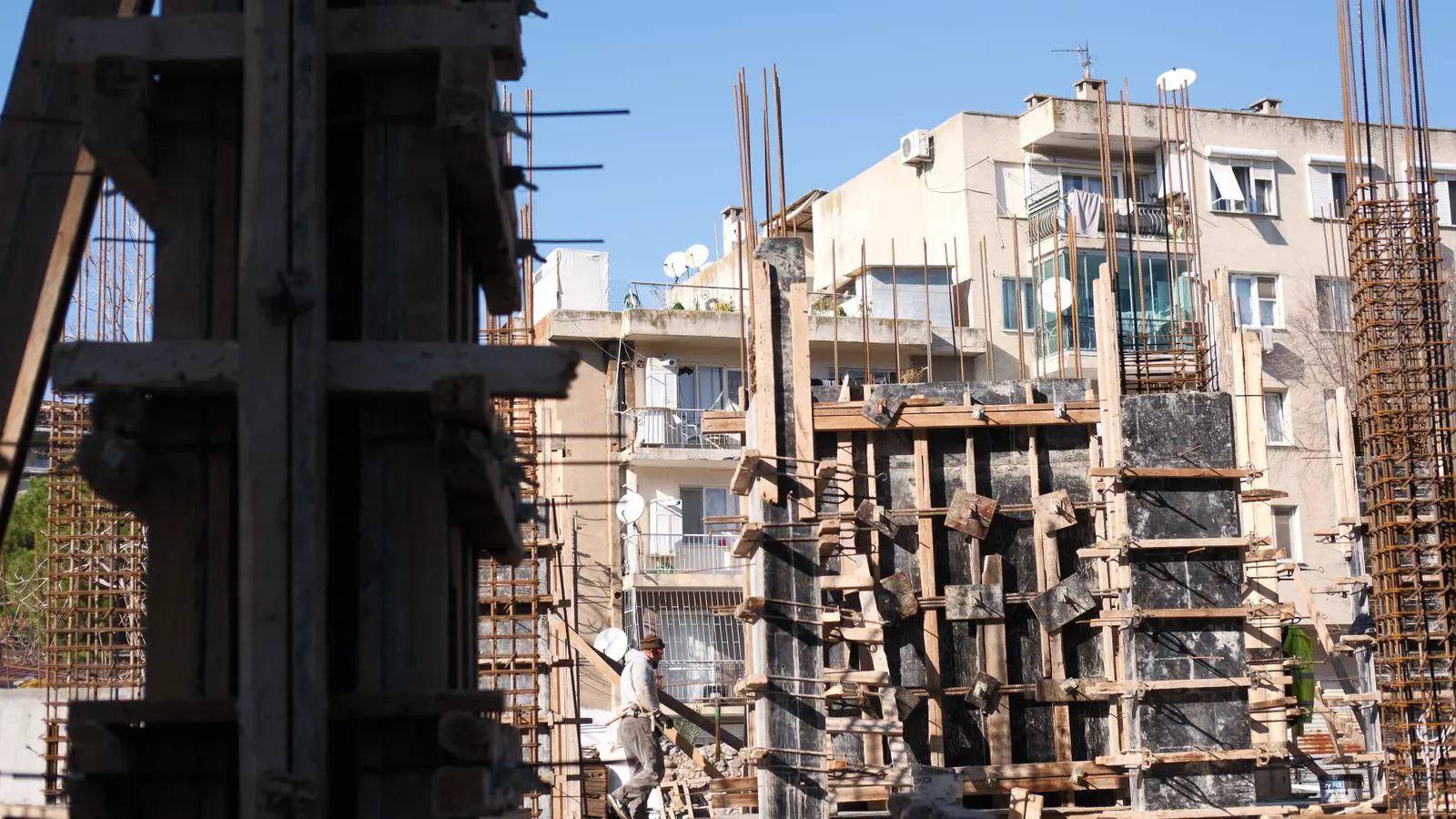
Tubular vs Frame Formwork: Comparison

Tubular formwork offers flexibility for irregular shapes but requires more labor. Frame formwork delivers speed and standardization for repetitive work. The choice depends on geometry, crew size, and site constraints.
- Tubular systems suit complex geometries but demand skilled labor and careful bracing.
- Frame formwork systems prioritize speed and standardization for repetitive, linear work.
- Load capacity depends on member size, spacing, and bracing, not just the base material.
- Crew size and site access heavily influence which system delivers a better cost and safety outcome.
- Verify formwork design documents against actual site conditions before erection.
Formwork selection shapes the pace and safety profile of every pour. Two systems dominate the market for concrete supports: tubular and frame. The difference is not just cosmetic. It changes how crews brace, how loads transfer, and how quickly the structure reaches stability.
Structural Differences
Tubular formwork uses round steel pipe, typically 35 mm or 48 mm diameter, connected with couplers, clamps, and base plates. The members act as columns or braces. Because the cross-section is circular, the system resists bending in any direction, but it relies heavily on joint integrity. A loose coupler or an unbraced vertical can introduce weak points that are hard to inspect visually.
Frame formwork uses rectangular hollow sections, often 50 mm by 50 mm or larger, welded into modular panels. These panels bolt or pin together to form walls, slabs, and decks. The rectangular geometry provides predictable moment resistance along the long axis. The main advantage is stiffness per unit mass. The main drawback is orientation. A frame panel is strong in one direction and weak in the other unless braced.
The joint design separates the two. Tubular systems use threaded or sleeve couplers. Frame systems use pin connections, bolted flanges, or welded tabs. Pin connections resist movement but can loosen under vibration or repeated assembly. Bolted connections hold tighter but require more torque checks.
Load Capacity and Member Sizing
Load capacity in formwork is a function of member size, spacing, and the bracing pattern. A larger pipe diameter or hollow section increases moment of inertia, which reduces deflection. But capacity also depends on the span. A 50 mm hollow section spanning 2.4 m behaves very differently from the same section spanning 3.6 m.
Tubular formwork allows engineers to vary pipe sizes on the same project. A 35 mm member might serve as a filler or a secondary brace, while a 48 mm member carries the primary vertical load. This flexibility is useful on tight budgets, but it creates a risk of mixing incompatible components. A 35 mm pipe coupler does not accept a 48 mm pipe without an adapter. Adapters add joints, and joints are where failure starts.
Frame formwork standardizes member sizes. A 50 mm frame panel is a 50 mm frame panel. The manufacturer specifies the maximum span and load rating for that panel. This simplifies procurement and inspection. However, if the site geometry does not match the standard panel dimensions, the system requires additional bracing or custom fabrication.
The load path matters. In tubular systems, loads transfer through couplers and clamps. Every joint is a potential failure point. In frame systems, loads transfer through pins and bolted flanges. The load path is more direct, but the connection points must remain tight throughout the pour.
Setup and Teardown Speed
Frame formwork generally erects faster. Panels come pre-assembled or near-pre-assembled. A crew can lock a panel into place with a few pins or bolts. The modular nature means workers can repeat the same motion hundreds of times. This repetition builds speed and reduces error rates.
Tubular formwork requires more individual steps. Each pipe must be measured, cut, and coupled. Each brace must be positioned and clamped. The setup time increases with the number of joints. A 10 m tall tubular column requires more couplers and more labor than a 10 m frame column made from four panels.
Teardown follows the same pattern. Frame panels come apart as units. Tubular systems require disassembling every coupler and clamp. On a site with limited storage, this difference matters. Frame panels stack neatly. Tubular pipes nest, but couplers scatter and get lost.
The speed advantage of frame formwork is real, but it is not absolute. If the geometry is irregular, frame formwork slows down. A curved wall or a complex corner requires cutting panels and adding custom braces. Tubular formwork handles those shapes with fewer custom parts.
Best Use Cases
Tubular formwork is best for complex, non-repetitive work. Curved walls, columns with varying diameters, and small-scale projects benefit from the flexibility of round pipe. The system allows engineers to design a bespoke bracing pattern for each element. This is valuable on retrofit work or where access is tight and large panels cannot be maneuvered.
Frame formwork is best for repetitive, linear work. Long wall lines, slab edges, and repetitive column grids suit the modular approach. A crew can set a frame panel in seconds. The system excels when the same geometry repeats across a project.
| Option | Best for | Limitations |
|---|---|---|
| Tubular Formwork | Complex geometries, small projects, retrofit work | Slower setup, more labor, joint inspection burden |
| Frame Formwork | Repetitive walls, long slabs, standard columns | Limited flexibility, requires standard panel sizes, custom work for irregular shapes |
| Mixed System | Projects with both repetitive and complex elements | Higher inventory cost, requires coordination between two systems |
| Custom Fabricated | Highly specialized shapes, high-load applications | High cost, long lead times, limited reuse |
| Hybrid Panel | Balance of speed and flexibility | Higher cost than standard frame, slower than pure frame |
Safety and Inspection
Safety in formwork hinges on the ability to verify that each member is carrying its intended load. Frame formwork makes this easier. The load path is visible. Panels lock into place, and pins or bolts are accessible for inspection. A worker can check a pin connection with a single glance.
Tubular formwork makes this harder. Couplers are often buried inside the structure or hidden behind bracing. A loose coupler is not always visible. This does not mean tubular formwork is unsafe. It means the inspection process must be more thorough. Crews need a systematic check of every joint, especially on high-rise columns or deep foundations.
The safety culture of the site matters. On a site with experienced crews and strict supervision, tubular formwork performs well. On a site with rotating labor or tight schedules, the extra inspection burden can lead to shortcuts. Frame formwork is more forgiving. The modular design reduces the number of critical joints and makes errors more obvious.
Cost and Inventory
Frame formwork often has a higher upfront cost per meter. The panels are heavier and more expensive to manufacture. However, the speed of erection can offset this cost on large projects. Fewer labor hours mean lower crew costs.
Tubular formwork has a lower cost per meter of pipe. The inventory is easier to store and transport. However, the labor cost is higher. More couplers, more clamps, more time. On a small project, the lower material cost wins. On a large project, the labor cost can reverse the advantage.
Inventory management also differs. Frame formwork panels are counted. Lost or damaged panels are easy to identify. Tubular pipes are nested and counted by length. Couplers and clamps are small and easily lost. A lost coupler is a small cost. A lost 48 mm pipe is a larger cost. The system with more small parts creates more inventory risk.
When to Pick Each
Pick frame formwork when the geometry is repetitive and the crew is experienced. Long wall lines, slab edges, and standard column grids are the sweet spot. The speed advantage is significant, and the inspection process is straightforward. The system rewards discipline in assembly and teardown.
Pick tubular formwork when the geometry is complex or the project is small. Curved walls, irregular corners, and retrofit work suit the flexibility of round pipe. The system allows engineers to design a bespoke solution for each element. The trade-off is higher labor and a more demanding inspection process.
A mixed approach is common on large projects. Frame formwork handles the repetitive walls and slabs. Tubular formwork handles the columns and complex corners. This approach requires coordination. The two systems must share load paths and bracing patterns. The design documents must be clear.
The final decision is not just technical. It is operational. The crew size, site access, and storage space all influence the outcome. A small crew on a tight site may struggle with heavy frame panels. A large crew on a repetitive project may waste time on tubular assembly. The best system is the one that matches the project reality, not the theoretical ideal.
Final Thoughts
Frame formwork wins on speed and standardization. Tubular formwork wins on flexibility and lower material cost. The load capacity of both systems depends on member sizing, spacing, and bracing. The safety profile depends on inspection discipline and crew competence. There is no universal winner. The right choice comes from matching the system to the geometry, the crew, and the site constraints.
Frequently asked questions
Which formwork system is stronger?
Strength depends on member size, spacing, and bracing. Frame panels are stiff in their long axis. Tubular pipes resist bending in any direction. The design documents determine the actual load capacity.
Can I mix tubular and frame formwork on one project?
Yes, but the design must be coordinated. The two systems must share load paths and bracing. Mixing them without a clear plan creates weak points and confusion.
How do I inspect a loose coupler in tubular formwork?
Visual and physical checks are required. Tap the joint to hear for movement. Use a flashlight to inspect hidden joints. A systematic inspection schedule is needed.
What is the fastest system to erect?
Frame formwork is generally faster for repetitive work. Panels lock into place quickly. Tubular formwork requires more individual steps and joint assembly.
Which system is cheaper for small projects?
Tubular formwork is usually cheaper for small or irregular projects. The lower material cost and easier storage offset the higher labor cost on small scales.