Explaining Scaffold Components for Non-Engineer Procurement Teams
This guide explains common steel scaffold parts and how they affect sourcing. You will learn which specifications matter when writing orders for tubes, couplers, boards, and base plates.
- Scaffold purchasing requires clear definitions of standards, couplers, and connection parts.
- Tube size and wall thickness determine load capacity and fit with couplers.
- Base plates, brackets, and boards must match the tube diameter and site conditions.
- Standardization across components prevents fit issues during erection.
- Written specs should list dimensions, material grade, and connection type explicitly.
Why Component Definitions Matter for Purchasing
Procurement teams often write orders based on a general request for scaffolding, leaving out the specific parts needed. This creates gaps between what the site requires and what the supplier delivers. A tower scaffold system is not one item. It is a set of steel tubes, couplers, boards, base plates, and connection brackets that must fit together.
When you understand each part, you can specify dimensions, material grades, and connection methods. This reduces the risk of receiving incompatible items. It also makes it easier to compare quotes and verify that the delivered system matches the erection plan.
What Are the Main Parts of a Steel Scaffold System?
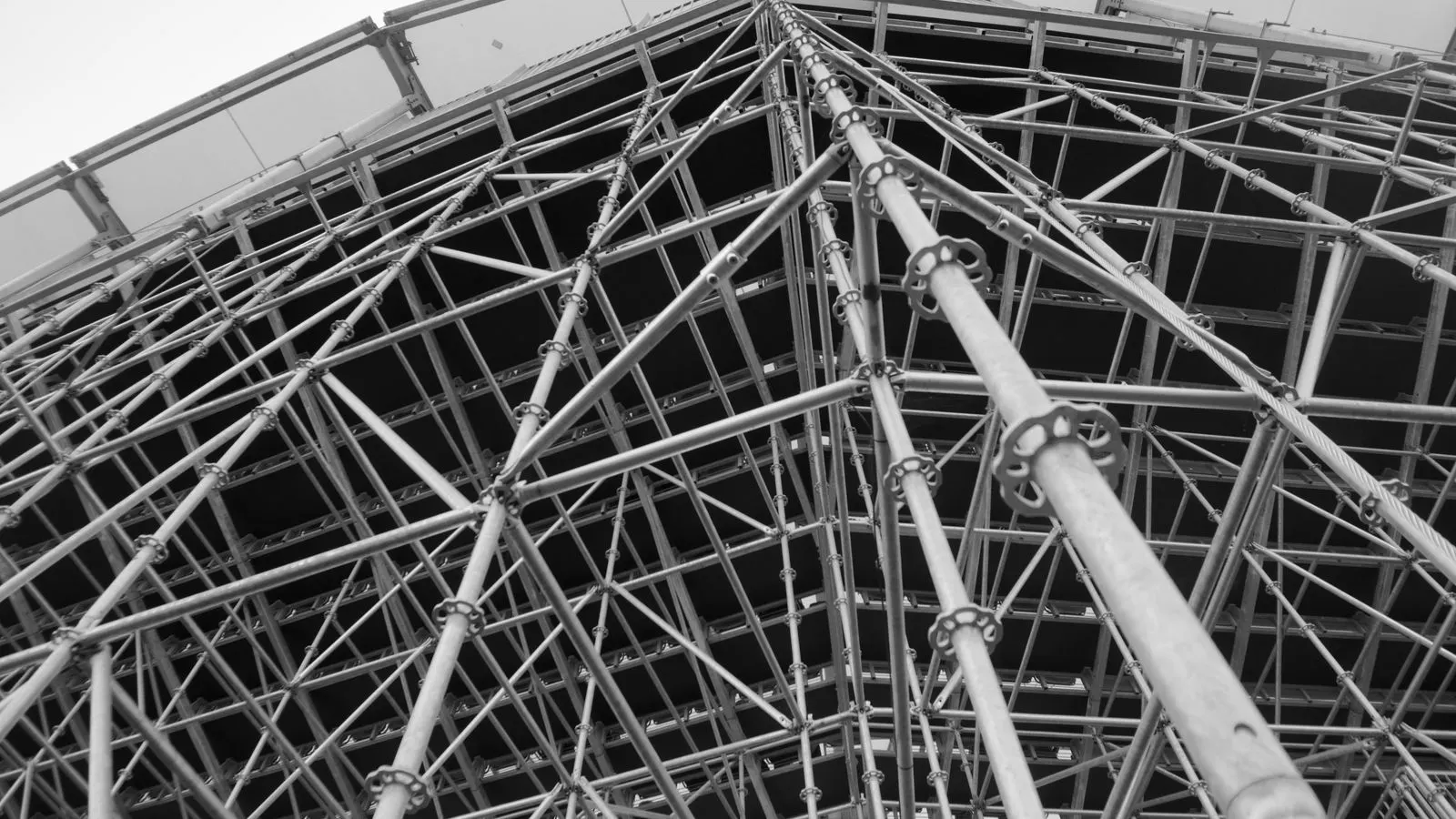
A typical steel scaffold system includes vertical tubes, horizontal ledgers, couplers, base plates, and scaffold boards. Each part has a specific function. The tubes provide the primary structure. The couplers lock the tubes together at joints. The base plates distribute load onto the ground. The boards form the working platform.
The following table lists these core components and their primary role.
| Component | Primary Function |
|---|---|
| Main tube | Vertical support and load-bearing member |
| Ledger | Horizontal bracing and working platform support |
| Coupler | Connects tubes at joints |
| Base plate | Distributes load on the ground |
| Scaffold board | Working platform surface |
The main tube is the central element. It carries vertical loads and helps resist lateral forces. The ledger runs horizontally around the scaffold. It supports the boards and ties the scaffold to the structure it supports. The coupler connects the main tube to the ledger or to other main tubes. The base plate sits at the bottom of the main tube. It spreads the load over a larger area of the ground. The scaffold board rests on the ledgers. It provides a solid surface for workers.
How Tube Specifications Affect Sourcing
The main tube is usually a hollow steel pipe. Its size is measured by outer diameter and wall thickness. These two numbers determine the stiffness and strength of the scaffold. A larger outer diameter increases the bending resistance. A thicker wall increases the capacity to resist buckling.
When writing an order, you must specify both numbers. You also need to state the material grade. Standard carbon steel is common. Some projects require higher strength steel or galvanized steel for corrosion resistance. The connection type must match the couplers. If the couplers use a specific hole pattern, the tubes must have matching holes.
A common mistake is ordering tubes without specifying the hole pattern. This can result in tubes that do not fit the couplers. The site team may then have to delay erection until replacements arrive. To avoid this, include the outer diameter, wall thickness, material grade, and hole spacing in the purchase order.
Understanding Couplers and Connection Types
Couplers are the joints that connect scaffold tubes. They come in different designs. The most common types are the swivel coupler, the locking coupler, and the slotted coupler. The swivel coupler allows the tubes to rotate slightly, which helps with alignment. The locking coupler provides a fixed connection that resists movement. The slotted coupler uses a slot and a pin to allow adjustments in height.
The choice of coupler affects the erection speed and the stability of the scaffold. Swivel couplers are faster to connect because they do not require precise alignment. Locking couplers are more rigid and may be preferred for taller structures or high wind conditions. Slotted couplers offer flexibility but require more careful adjustment to ensure tight connections.
When sourcing, specify the coupler type and the number of couplers needed per tube. The order should also state the material and finish. Galvanized couplers resist rust better than black steel couplers. The spec should match the tube finish to prevent galvanic corrosion.
Base Plates, Brackets, and Board Support
The base plate is a flat steel plate that sits under the main tube. It distributes the load from the scaffold onto the ground. The size of the base plate depends on the ground conditions. Soft soil requires a larger base plate to prevent sinking. Hard ground may allow a smaller plate.
Brackets are used to extend the working platform. They attach to the main tube and hold the scaffold boards. The bracket must fit the tube diameter. If the bracket is too small, it will not grip the tube. If it is too large, it may not fit properly.
Scaffold boards are typically wooden or synthetic. They rest on the ledgers and brackets. The order should specify the board width, thickness, and length. The width must match the scaffold bay. The thickness affects the board deflection under load. A thinner board may bend more, which can be uncomfortable for workers.
How to Write a Clear Purchasing Order
A clear purchasing order lists each component with its dimensions and quantity. It should not rely on a general description. Use a table format in the document. Each row should have a component name, specification, material, finish, and quantity.
For example, a line might read: Main tube, outer diameter 48 mm, wall thickness 2.0 mm, carbon steel, black finish, 500 meters. Another line might read: Swivel coupler, 48 mm, carbon steel, 1,000 units. This level of detail allows the supplier to quote accurately and the site team to verify the delivery.
Include the connection standard if you have one. If the project requires a specific tube and coupler system, state that explicitly. This prevents the supplier from substituting a different system that may not be compatible.
Common Mistakes in Sourcing Scaffold Parts
One common mistake is mixing different tube diameters in the same system. This creates fit issues with the couplers. The couplers will not connect the tubes properly. The scaffold may sway or fail to lock.
Another mistake is ignoring the base plate size. If the ground is soft, a small base plate may sink. This causes uneven loading and instability. The order should match the base plate size to the site conditions.
A third mistake is not specifying the material grade. Different grades have different strength properties. If the project requires a higher grade, the order must state it. Otherwise, the supplier may provide a standard grade that is not suitable for the load.
These mistakes are easy to avoid with clear specifications. They save time and money on site.
Worked Example in Plain Words
Imagine a procurement team needs to order a tower scaffold for a 20 meter building. They must specify the main tubes, ledgers, couplers, base plates, and boards.
The main tubes are 48 mm outer diameter with 2.0 mm wall thickness. The material is carbon steel. The finish is black. The quantity is 500 meters.
The ledgers are the same size as the tubes. The quantity is 300 meters.
The couplers are swivel type, 48 mm, carbon steel, black finish. The quantity is 1,000 units.
The base plates are 300 mm by 300 mm, carbon steel, 2.0 mm thick. The quantity is 50 units.
The scaffold boards are wooden, 200 mm wide, 25 mm thick, 2.0 meters long. The quantity is 100 boards.
This order is clear. The supplier knows exactly what to deliver. The site team can verify the parts against the erection plan. There is no ambiguity.
How This Relates to Formwork and Other Systems
Scaffold components are part of a broader system. The same principles apply to formwork and other steel structures. The parts must fit together. The specifications must be clear. The material grades must match the loads.
If you are sourcing formwork, the same logic applies. You need to specify the panel size, the frame size, and the connection hardware. The parts must be compatible. The order must be detailed.
Understanding scaffold components helps you write better orders for any steel structure. The details matter. The fit matters. The material matters.
Final Checks Before Placing the Order
Before you place the order, review the specifications. Check that the tube diameter matches the coupler size. Check that the base plate size is suitable for the ground. Check that the board width matches the scaffold bay.
Review the material grade. Ensure it meets the project requirements. Check the finish. Ensure it matches the environment.
Review the quantities. Ensure you have enough of each part. Add a small allowance for damage or loss.
These checks take time. They prevent costly mistakes. They save the site team from delays. They ensure the scaffold is safe and functional.
Frequently asked questions
What is the difference between a swivel coupler and a locking coupler?
A swivel coupler allows slight rotation to help with alignment. A locking coupler provides a fixed connection that resists movement. The choice depends on the erection speed and stability requirements.
How do I know which base plate size to order?
The base plate size depends on the ground conditions. Soft soil requires a larger plate to distribute the load. Hard ground may allow a smaller plate. Check the site conditions before ordering.
Why is the tube wall thickness important?
The wall thickness affects the resistance to buckling. A thicker wall provides more stability under load. It is a critical specification for structural integrity.
Can I use different tube diameters in the same scaffold system?
No. Mixing different tube diameters creates fit issues with the couplers. The couplers will not connect the tubes properly. Use a single tube diameter for the entire system.
What should I include in a scaffold purchasing order?
Include the component name, dimensions, material grade, finish, and quantity. Specify the connection type and any required standards. This level of detail ensures the supplier delivers the correct parts.