Tube and Coupler vs H Frame: Which Fits Your Site
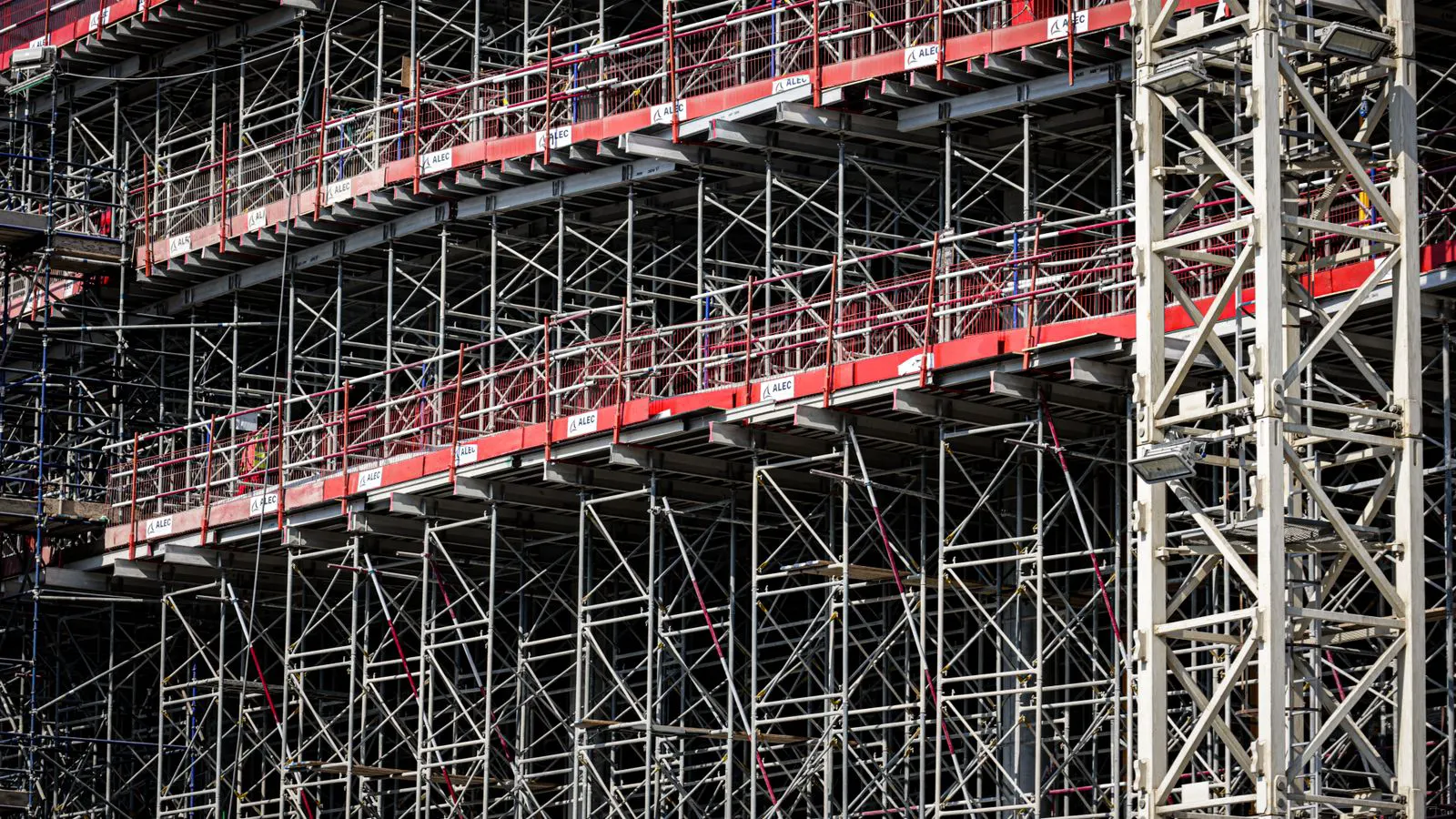
Tube and coupler suits irregular sites and short-duration work, while h frame offers faster, more rigid setup for flat, large-area projects. The best choice depends on site geometry, load requirements, and crew experience, balancing speed against flexibility and long-term reuse.
- Tube and coupler adapts to uneven ground and tight corners but requires more time and labor per joint.
- H frame is faster to erect on level sites and offers high stability without complex bracing.
- Choose tube and coupler for irregular layouts, and h frame for broad, flat areas where speed matters most.
- Crew skill and access to spares heavily influence which system actually performs well on your site.
- Check coupler tightness and base plate conditions to reduce sway and improve safety in either system.
What changes the answer: site shape, load, and crew
The choice between tube and coupler and h frame is not about which one is “better.” It is about which system matches the geometry of the work area and the constraints of the crew. A flat, open slab with a large footprint favors h frame. A building perimeter with ledges, columns, and changing heights favors tube and coupler.
The two systems are both made of steel, both rely on temporary connections, and both need proper base plates, bracing, and tie-ins. The difference is in how the load path works and how quickly the frame goes up.
How each system builds its structure
Tube and coupler uses round or square tubes joined by couplers at the ends. The coupler passes through the tube end, clamps the joint, and transfers load from one tube to the next. Every joint is a potential point of movement if not clamped correctly. That means the frame depends on tight couplers, correct tube lengths, and regular checks.
H frame uses prefabricated units. A base frame holds horizontal standards, and the upper frame locks on top. The connection between the two is a single, fixed joint. There are no individual couplers at the corners. The unit is rigid by design.
The trade-off is obvious. Tube and coupler gives you many possible heights and angles. H frame gives you a set of standard heights. If the work height falls between standard H frame levels, you may need to step up, use a platform, or accept a different setup.
Where tube and coupler wins
Tube and coupler fits sites where the work area changes shape as you go. Think of a building exterior with columns at different depths, a mezzanine with an offset edge, or a pipe rack that does not follow a square grid. You can cut tube lengths to match the exact height, place couplers at the required points, and build a frame that hugs the structure.
It also works well for short-duration tasks where you need a scaffold in one corner only. If the project is a two-week patch job, the extra time to set up tube and coupler is often less than the time to store, move, and re-erect H frame units.
Crews that have done tube and coupler many times can work quickly. The process is familiar: measure, cut, clamp, check. The risk is not speed. It is discipline. Loose couplers create sway. A scaffold that moves under load is a serious problem.
Where H frame wins
H frame is built for speed on flat ground. A crew can set a base frame, lock the top frame, and have a stable platform in minutes. There are no couplers to torque or check at every corner. The unit is self-bracing in many designs, which reduces the number of diagonal braces needed.
For large areas, such as a roof edge, a concrete pour, or a long facade, H frame can cover more ground with fewer labor hours. The prefabricated nature also means fewer parts to lose or damage. If a joint is not a coupler, it cannot loosen in the same way.
The limitation is rigidity. If the site is not level, or if the work area is narrow, H frame may not fit. You may need to add base plates, use outriggers, or abandon the system entirely.
Performance under load
Both systems can carry high loads if designed correctly. The difference is in how the load moves.
In tube and coupler, the load travels through a chain of joints. Each coupler must transfer the force from one tube to the next. If a joint is loose, the load path weakens. That is why regular checks of coupler tightness are part of normal site practice.
In H frame, the load travels through the fixed joint and the base frame. The unit is designed to handle the load without relying on multiple clamped connections. This makes it less sensitive to small changes in joint condition.
For heavy formwork or concrete placement, the load is often spread across a platform. H frame can handle this well because the platform sits on a stable, rigid base. Tube and coupler can also handle it, but the platform must be secured to the frame, and the frame must be tied in at the correct points.
Speed and labor on a typical site
Speed depends on more than the system itself. It depends on the crew, the access, and the condition of the parts.
A tube and coupler crew needs to measure, cut, clamp, and check. If the crew is experienced, each joint takes a few minutes. If the crew is new, each joint takes longer. The total time adds up quickly over a large scaffold.
An H frame crew needs to position the base frame, lock the top frame, and add braces. The process is simpler. There are fewer individual joints to check. The total time is often lower, especially for large, flat areas.
The labor cost difference is not always large if the crew is the same. But the risk of delay is different. If a tube and coupler site runs into a loose joint, the crew must stop, find the joint, and fix it. If an H frame site has a level issue, the crew may need to move the unit or add base plates. Both are manageable, but they take time.
A quick comparison table
| Option | Best for | Limitations |
|---|---|---|
| Tube and coupler | Irregular sites, short tasks, custom heights | More labor per joint, more checks, more sensitive to loose couplers |
| H frame | Flat, large-area work, fast setup | Limited height options, less flexible in tight or uneven spaces |
| Mixed system | Sites that need both speed and flexibility | Requires two sets of parts, two training paths, and more inventory |
How to choose for your project
Start with the site plan. If the work area is flat and open, and the height is a standard level, H frame is often the faster choice. If the work area has columns, ledges, or changing heights, tube and coupler is usually the better fit.
Next, look at the crew. If the crew has done H frame before, they will set it up quickly. If they have done tube and coupler, they will manage the joints with confidence. A crew that is new to a system will be slower and more likely to make mistakes.
Finally, check the load. If the load is heavy and spread over a large platform, H frame may be more stable out of the box. If the load is concentrated in a small area, or if the platform is small, tube and coupler can be more precise.
Common mistakes that cost time
In tube and coupler, the most common mistake is leaving a coupler loose. A loose coupler can allow the tube to shift under load. That creates sway, which can damage the scaffold and endanger workers. Checking couplers at the start of each shift is a simple habit that prevents bigger problems.
In H frame, the most common mistake is setting the unit on uneven ground. If the base frame is not level, the top frame may not lock properly, and the unit may lean. Using base plates or outriggers solves this, but only if the ground is firm enough to support them.
Both systems suffer from poor base conditions. If the ground is soft or wet, the base plates can sink, and the whole frame can shift. This is a site condition, not a system flaw, but it affects both equally.
When to use a mixed approach
Some sites need both. A building may have a flat roof edge that works well with H frame, and a narrow facade that requires tube and coupler. A mixed approach is practical if you can store both sets of parts and train the crew on both.
The advantage is flexibility. You can use H frame where it is fast, and tube and coupler where it is needed. The disadvantage is inventory. You need two sets of parts, two sets of spares, and two sets of training. If the project is small, the extra cost and complexity may not be worth it.
For large, multi-phase projects, a mixed approach is often the best fit. The crew can use the right system for each phase without wasting time or labor.
Final check before the first shift
Before the crew starts, walk the site with the system in mind. For tube and coupler, check the couplers, the tube lengths, and the base plates. Make sure the couplers are tight and the base plates are on solid ground.
For H frame, check the level, the lock, and the base plates. Make sure the unit is stable and the top frame is fully locked.
Both systems need a tie-in plan. If the scaffold is not tied to the structure, it can move in wind or under load. Tie-ins should be at the correct points, and the connections should be secure.
The right system is the one that fits the site, the load, and the crew. Tube and coupler is flexible and precise. H frame is fast and stable. Choose based on the facts of the site, not on habit.
Frequently asked questions
Can H frame be used on uneven ground?
H frame works best on level ground. If the ground is uneven, you need base plates, outriggers, or a different system.
Is tube and coupler stronger than H frame?
Both can be strong if designed and set up correctly. The difference is in how the load travels and how sensitive each is to joint condition.
Which system is easier for a new crew to learn?
H frame is often easier because it has fewer individual joints. Tube and coupler requires more attention to each joint.
Can you mix tube and coupler and H frame on one site?
Yes, but you need both sets of parts and training. It is practical for multi-phase projects with different site conditions.
What is the biggest safety risk in each system?
In tube and coupler, loose couplers can cause sway. In H frame, uneven ground can cause the unit to lean or shift.